HUMANS
23 October 2015
Set in suburban London, HUMANS takes place in a parallel present where the latest must-have gadget for any busy family is a Synth – a highly developed, artificially intelligent servant eerily similar to its living counterpart.
Penned by British writing partners Sam Vincent and Jonathan Brackley, and based on the award-winning Swedish sci-fi drama "Real Humans", the series explores the emotional impact and the ethical issues that comes as the lines between humans and machines become increasingly blurred. This mature and powerful thriller is a joint production of AMC, Channel 4 and Kudos and stars Colin Morgan, Gemma Chan, Katherine Parkinson, Tom Goodman-Hill and William Hurt.

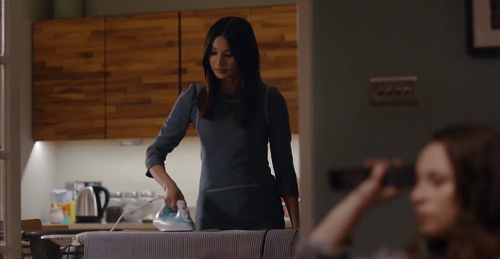
During the first episode, Anita, a Synth played by Gemma Chan demonstrating surprisingly human attitudes, is ironing while the rest of the family watch television or do other leisure activities. It was a surprise to us to discover that the iron used in this scene has left the creative lab of ADN DESIGN. It is Bosch TDA2315 model, an iron where simplicity is led to its highest expression to propose a responsible and efficient experience. With a smooth image inspired by nature, the model is inserted into the values of the brand to establish meaningful emotional connections with people. So it has been very interesting for all the design team see it in the hands of a robotic user.

To play this role, Gemma Chan and other robotic actors had to learn to behave as true synthetic machines in the synth school, a kind of school run by the choreographer of the show, Sam O'Neill. "The directors and producers wanted the movements of these characters were different from humans," Chan explains. "All movements had to be efficient and economical, so we had to relearn everything: how to walk, how to sit, how to stand up" and, in this case, including how to iron. It has been a pleasure to see that the model created by ADN DESIGN is perfectly suited to these robotic requirements and, thanks to their ability to make the people's experiences meaningful, highlights the dialogue between technological efficiency and human emotion.
Labels: Films, Products, Publications, Series

Design for Films #4
02 February 2015

Sometimes it's really a pleasure to find products arising the creative lab of ADN DESIGN inserted into vibrant and tender stories that leaps off the screen to take its place in your dreams. Volver ("return"), the beautiful 2006 film written and directed by Pedro Almodóvar, is one of them.
There is no director alive more connected to the hearts, minds and mysteries of women than Spain's Pedro Almodóvar. All actresses who populate this amazing work are immense in their extraordinary characters. Carmen Maura, Penélope Cruz, Lola Dueñas, Blanca Portillo, Yohana Cobo and Chus Lampreave make a tender and transgressive story, full of surprises and twists. The film won over 40 international awards, including four European Film Awards and five Goya Awards.
In the words of Almodovar, the film tells about «three generations of women who survive the east wind, fire, madness, superstition and even death through kindness, lies and boundless vitality.»

Beside them, a significant object designed in 1993 for the company Araven: the trash bin where Raimunda (Penélope Cruz) used to throw away the empty beer cans consumed by her husband Paco (Antonio de la Torre), more interested in drinking, watching football and spying on his daughter while changing, instead of seeking new employment.

A trash bin used later by Raimunda to collect the blood from her husband after his teenage daughter (Yohana Cobo) stabbed him with a kitchen knife when he tried to rape her.
The renowned designers Jasper Morrison and Naoto Fukasawa, coined a few years ago the word "supernormal" to refer to this type of product. Timeless and functional objects that accompany our whole existence, but we rarely think about them. Hidden heroes who, like the clip or the band aid, talk about the enjoyment of the ordinary, permanence and silence. With an impeccable performance, this attentive and discreet trash bin incorporates a rear container for trash bags that also provides a complete opening of the lid, without interference or imbalances. An object designed to make easier and enjoyable our daily lifes.
«When something breaks and you need to buy it again... that's a good design. Every day, at home, we don't see those objects. But when in a home that is not ours, we don't find a reading lamp next to the bed or a potato peeler that works, we realize its importance. That's when his absence reveals his greatness. And when we learn to see the extraordinary in the ordinary», Morrison explained in El País. Nobody ever tires of such a design.
Labels: Products, Publications
ADN DESIGN in the Proyecta 56 Magazine
14 January 2015
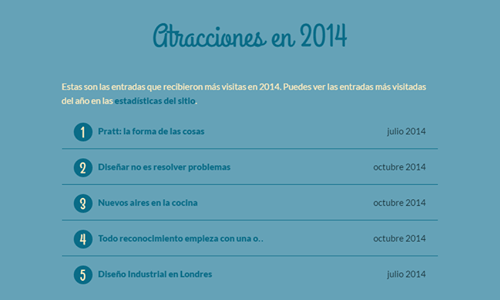
"Design is not problem solving", the surprising and provocative article written by Carlos Alonso Pascual and published in the Proyecta 56 spanish magazine, has been one of the most visited entries in 2014. The 5 most read articles are:
1. Pratt: The shape of things, by Nacho Urbina Polo
2. Design is not problem solving, by Carlos Alonso Pascual
3. New airs in the Kitchen, by Josep Puig
4. Any recognition begins with an ovation, by Gravina
5. Industrial Design in London. Interview with Roger Arquer, Claudio Ripol and Óscar Díaz
Labels: Opinion, Publications
Design for Films #3
04 November 2014
Victoria Abril is probably one of the best actresses in Spanish cinema, and has provided a large number of unforgettable performances in such iconic films as "Tie Me Up! Tie Me Down!", "Nadie hablará de nosotras cuando hayamos muerto" or "Amantes" to quote only some of them. Today we will speak about a small comedy within its extensive filmography.
"Escuela de Seducción" is a comedy directed by Javier Balaguer and released in 2004, which deals with the war of the sexes using misunderstandings and false personalities as dramatic resources. Sandra Vega (Victoria Abril), a feminist psychologist who runs a highly rated radio program, was responsible for that Oscar (Javier Veiga) lost to a former girlfriend. After a chance meeting between them he decides to take revenge using a fictional character who captivates the female audience with its romantic tone. These interventions are so successful that Sandra is unable to get rid of him, eclipsing even its program, while Oscar takes advantage of his hidden fame to promote their "Seduction School".
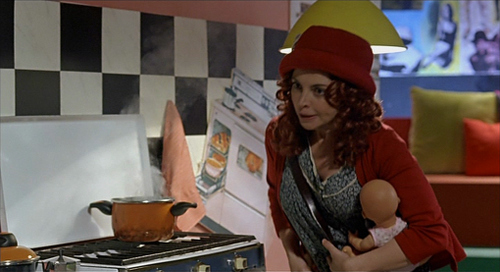
In one of the craziest situations in the film, Javier Veiga and Neus Asensi share stage with one of the many products made in the ADN DESIGN dream factory. This is the Naranja Plus series, a line of kitchenware designed in 2000 for San Ignacio. The configuration of handles and knobs gives the series a great differentiating aspect, allowing a variety of color combinations, from traditional to the most amazing and vital ranges.
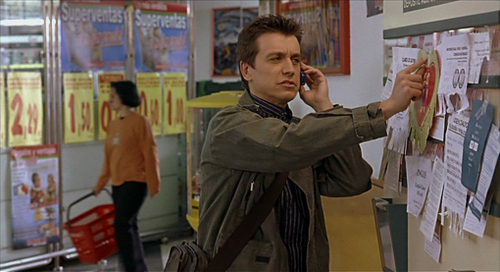
However, this is not the only one of the products created by ADN DESIGN appearing in the comedy. In a scene where Oscar sets his Seduction School posters in a supermarket, can be seen the Shopping Basket designed in 1996 for Araven. The longitudinal configuration of the handle of this innovative basket allows a natural hand positioning for an easy and safe transportation.
As we can see, they are products that are already part of our deepest cultural and emotional landscape. It is interesting to note that both objects are still in production, demonstrating the remarkable longevity of the products created by ADN DESIGN. The emotional connection that people establish with our creations promote a significant very long experience over time and provide a solid business opportunity for companies.
Labels: Products, Publications
Design is not problem solving
10 October 2014
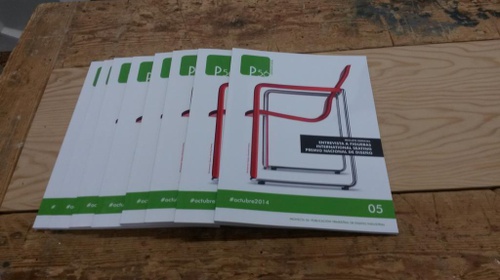
Projecta 56 is a digital magazine aimed at promoting reflection, discussion and learning of Industrial Design and intended to disseminate their significant contribution to economic, social and cultural development of enterprises and the whole society. The publication, that last October 9th marked one year of life, is a sparkling point of encounter and exchange of ideas and experiences between professional industrial designers, teachers and students. To celebrate its first birthday, the magazine has published a special issue on paper to make their content available to bookstores, university libraries, associations, and most importantly, in our hands! Because, as stated from the editorial team, «we want the publication to become a traveling companion, and something to show to friends, colleagues and family.»
Along with other leading professionals, Carlos Alonso Pascual has contributed to the expansion of this exciting initiative with an article with a surprising and provocative title:
Design is not problem solving
Abstract
Charles and Ray Eames, a renowned and influential couple of designers who created some of the most iconic products of the last century, used to say that «we are not artists, we solve problems.» This powerful statement has guided the development of design as a creative activity for decades. «Design is not to invent, but to solve» recalled recently communicologist Norberto Chaves.
However, other highly reputable voices are questioning this monolithic conception to direct their attention to the design as an exploratory activity of new possibilities. A process oriented to the creation of cultural proposals capable of transforming reality rather than finding solutions.
In an ambiguous and changing world, deeply influenced by uncertainty and crisis, identify and solve problems no longer helps us. The new creative player in the twenty-first century must be transformed from a mere problem solver to a visionary researcher, an explorer of new opportunities. Mr. Wolf of Pulp Fiction –the famous film by Quentin Tarantino– finally become a new Doctor Livingstone, an explorer open to discover the creative springs and the possibilities hidden in the confines of the problems.
You can read the full article in Spanish in PROYECTA56
Download Diseñar NO es resolver problemas
Labels: Opinion, Publications
Design for Films #2
05 May 2014

If in previous posts we have referred to the relationship of ADN DESIGN to Bienvenido, Mr. Marshall (1953) and the appearance of one of our most iconic creations in El Día de la Bestia (1995), now it's the turn of The Maiden Heist (2009), a great comedy directed by Peter Hewitt and starring Morgan Freeman, Christopher Walken, William H. Macy and Marcia Gay Harden.
The Maiden Heist is a comedy centered on three museum security guards who devise a plan to steal back the artworks to which they have become attached after they are transferred to another museum.
Roger (Christopher Walken) is a security guard at an art museum who is only rarely in motion, opting rather to stare at his favorite painting, The Melonero Maiden, a beautiful woman staring forlornly out into the distance. Despite the fact he has a wife, Rose (Marcia Gay Harden), he's become rather obsessed with the painting. Rose wants Roger to retire so they can move to Florida, as she says in a great domestic scene while ironing his shirt.
The iron that Rose uses in this scene is one of the most successful and long-lived creations delivered by the ADN DESIGN factory of ideas. Designed by the end of 2002, this steam iron was released under the brand Black & Decker in 2004. More than ten years later, is still for sale in a new version. The AS700 Power Pro model incorporates a new soleplate with ceramic coating four times more durable than traditional nonstick soleplates, features AutoClean®, an automatic cleaning system that reduces mineral buildup, and an advanced auto-off.
Besides Black and Decker, other internationally renowned brands such as Kenwood, Ariete , Sencor or Bajaj Electrical, among others, have marketed this model, making it a fabulous bestseller worldwide.
It's really a surprise and a pleasure for us to find some of our most outstanding creations sharing the stage with such renowned and prestigious actors as Christopher Walken and Marcia Gay Harden.
Labels: Products, Publications
Design for Films
01 October 2013

The Day of the Beast (Spanish: El día de la Bestia) is a 1995 black comedy action film co-written and directed by Álex de la Iglesia, one of the most striking and iconic Spanish filmmakers. The film, which won a total of five Goya Awards, including Best Director, relates the exciting adventures of a Basque priest who tries to prevent the birth of the Antichrist. Comprised of equal parts high-concept horror and scathing social satire (in the mode of the director's peer and former collaborator Pedro Almodovar), this ambitious horror film has garnered a sizable cult following.
In one of his scenes, Father Angel Berriatúa, played by a great Álex Angulo, arrives at the boarding house where Mina (Nathalie Seseña) is ironing while watching a TV show on the occult. This domestic scene marks the start of a delirious, macabre and hilarious chain of events that culminates in a landslide on Christmas Eve in Madrid.
The iron used in that scene is the first product to emerge from the ADN DESIGN factory of ideas. It is the Styrium steam iron, designed in 1991 for Ufesa, the renowned brand of appliances that in 2002 was acquired by the European leader BSH Bosch & Siemens Home Appliances Group.
As recognized Javier Bergareche, Ufesa former CEO, in the book Design in the Basque Country, «Design means much more than only making things look good. This is what ADN DESIGN (Bilbao) –Design team that we started working with in 1991– was able to bring to our products. Our salespeople always said that our product Design was very popular. In addition, we had a competitive price and Design plus Price sells».
The PV153 Styrium steam iron (1992) soon positioned as one of the icons of the company, acted as an important spring when the company began its internationalization and remained in the market for a long time.
«By 1997, we were already leaders in the Spanish market –continued Bergareche–. Bosch & Siemens purchased the value of our brand in Spain. We had partly achieved this thanks to Design».
Probably the inclusion of the Styrium iron between the dazzling imagery of The Day of the Beast is due to a freak accident, like many of the adventures of the protagonists. In any case, it is our pleasure that one of our creations is part of the landscape from one of the best Spanish films of the 90s.
Labels: Products, Publications
Casa International features ADN DESIGN
10 April 2013
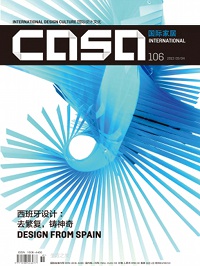
Casa International is a design magazine based in Beijing. Established in 2003, this bilingual publication’s features include architecture, interior design, product design and furniture. Casa has an established history of profiling the very best, most established architects and designers from around the world. In addition to this, Casa International is also focused on profiling the best emerging talents in the field of design from various countries. Casa’s readers extend throughout mainland China and includes several design bodies and educational institutions. Casa International provides an ideal platform for international architects and designers to profile and feature their newest and most creative projects to the Chinese reader.
Its last issue, dedicated to Spanish Design, reports prominently the most recent projects of ADN DESIGN along with an interesting interview that covers some of the most significant aspects of our work. The emotional values, the balance between function and seduction, observation, dialogue and empathy and attention to detail are among the interesting topics covered in this conversation that explores our concept of design and our work philosophy.
The attention to details and the search for a perfect balance between seduction and function on any product, no matter if high-end or basic, belongs to our DNA and differentiate us from many other design studios. Our passion for design, which has not diminished with the years of practice, fueled by endless reflections on design, is another element of our identity: passion and experience as design drivers. The easy-going spirit, open to dialog and transparency, the capacity for empathy, first launched by the founders, then adopted as a modus vivendi by our team, would certainly be another factor.
Download Casa International nº106
Labels: Opinion, Publications
ADN DESIGN: Design that seduces and thrills in Asia
17 January 2013
The portal Interiors from Spain, an initiative of ICEX Spain Trade and Investment, a government agency aimed at promoting design from Spain, just published a review of ADN DESIGN including an interesting interview on our experience in Asia:
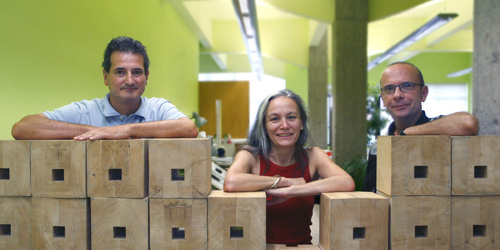
Interiors From Spain: How has ADN DESIGN evolved since it was founded in 1990?
ADN Design: Throughout our company’s history we’ve had to overcome several challenges. The Berlin Wall fell only a few months before ADN Design was founded. This led to several important changes that radically transformed our understanding of the world. In 2002, we initiated a very enriching process of close collaboration with Chinese companies, which has given us a profound understanding of its business culture and technological and manufacturing methods.
IFS: What’s the current state of design in China?
ADN Design: China is now the world’s most important manufacturer of goods, and however the world’s economy evolves in the next few years, the importance of the country’s design sector will become increasingly crucial. Design education has developed spectacularly there, too: various universities in Beijing, Hong Kong and Shanghai have seen their design courses become among the most renowned and prestigious ones in the world in a very short space of time. And Asia’s leading companies are making an intelligent, intensive use of their ability to research and of their creative resources.
In this interesting arena, our collaboration with Chinese companies has increased our capacity to adapt to highly dynamic, competitive environments far from Europe, and at a growth rate that requires that we be hugely flexible as we adapt to all the changes that occur on a daily basis...
You can read the complete interview on Interiors From Spain
Labels: Opinion, Publications
innobai 18
04 October 2010

On the occasion of the 20th anniversary of ADN DESIGN, Innobai magazine, in its issue number 18, has published an interview with Carlos San Jose, Brigitte Sauvage and Carlos Alonso Pascual.
over time, we have become direct collaborators of our clients, together we decide what is best for the company, and participate in the decisions of its design strategy.
Labels: Publications
BAI interviews ADN DESIGN
08 September 2010
BAI Bizkaia Innovation Agency has conducted an interview with Carlos San Jose, Brigitte Sauvage and Carlos Alonso Pascual, founding partners of ADN DESIGN:
In 2010 this design consultancy, located in Bilbao, celebrates its 20th anniversary. Therefore we took the opportunity to review with its founders a path with which many of you have crossed in your daily life. Not only because the ADN DESIGN credit is the creation of over 300 everyday products, but also because of their participation in initiatives seeking to improve the knowledge of design.
Read the full interview in BAI Innovation Agency (Spanish or Euskara only)
Labels: Opinion, Publications
Empresa Creativa 6
02 November 2009

The magazine Empresa Creativa, edited by the Grupo Sodercan - Company for Cantabria´s Regional Development, published its 6th number on July 2009 including an interview made to Brigitte Sauvage. Hereunder are a few of her statements:
I believe that with the crisis and the problem of moving the productive structures to countries with a cheaper labour force, Europe is trying to reposition or reinvent itself. In order to achieve this, innovation is being promotes but, in many occasions, it is being carried out in a relatively irresponsible manner. Innovation is a strategy, and like such, we must determine if it is the most suitable for resolving the problem our company has to face. Innovation, as any other radical change, entails certain risks. Therefore, we must determine if we have possibilities of assuming these risks and developing a successful innovative product. Innovation understood as a disruptive and radical change is not always the most suitable strategy for the company. There is not a single correct strategy for any problem in any context. Evolution, or evolutive innovation, since companies evolve and this is intrinsic to the nature of things.Download the complete interview.
Labels: Publications
Evolution
28 May 2009
Carlos Alonso led off the interesting discussion in the Innobasque group, the Basque Innovation Agency, in LinkedIn:
You can follow this fascinating discussion in LinkedIn (you have to register).Is the theory of biological evolution an appropriate model for apply to the evolution of companies and organisations?
This year marks the celebration of the second centenary of the birth of the English naturalist Charles Darwin, as well as the one hundred fiftieth anniversary of his most famous work – The Origin of the Species. Many events, publications, exhibits and conferences are taking place around the world, shining a new light on this knowledge of the development and diversification of life on Earth and of the role played by humanity in nature.
A number of business analysts and consultants have used the occasion to highlight the interesting parallels and divergences between biological evolution and the evolution of companies and organisations. They tend to put special emphasis on the mechanisms and effects of innovation in the world of nature as well as business.
In his famous work The Selfish Gene (1976), the ethologist and evolutionary theorist Richard Dawkins coined the term "meme" (analogous to gene) in order to describe how the principles of genetic evolution could also explain the spreading of ideas and cultural phenomena.
The most famous application of this to the business world comes from the consultant Geoffrey Moore, of TCG Advisors. In his book Dealing with Darwin: How Great Companies Innovate at Every Phase of Their Evolution (2005) he writes: "Evolution requires us to continually refresh our competitive advantage, sometimes in dribs and drabs, sometimes in major cataclysms, but always with some part of our business portfolio at risk and in play. To innovate forever, in other words, is not an aspiration; it is a design specification. It is not a strategy; it is a requirement."
What lessons can be learned from the theory of biological evolution and applied to our companies and organisations? Does the evolution of a company follow a specific direction, or is it a blind mechanism for adapting to the environment? What role is played by fate and necessity in the evolution of organisations?
Labels: Opinion, Publications
The internationalisation of design services
16 April 2009
The Aragon Centre for Industrial Design CADI has published an interview with Brigitte Sauvage in its informational bulletin, focused on the internationalisation of design services:
But...design services are exported?
Yes, of course. If you are offering services that have your own features, a particular work philosophy, a specific way to focus projects and a particular area of knowledge, these services may be the most appropriate for any company, regardless of their geographic location.
How does a small company like ours end up exporting to China. What could make us decide to do that?
We were working in sectors that manufactured products in large series, such as small home appliances. So, it was common from the mid-90s onward for products that we designed to be manufactured in emerging economies, primarily China. This awakened us to the importance that these countries were going to have, as well as how important it would be to have direct knowledge of how things work there.
On the other hand, we’ve seen a transformation in European companies that “unload” their productive structure, becoming purchasers of products conceived and manufactured in China. To the extent that these products were destined for European markets, we had the knowledge needed to design them, and as such, we could play an important role for Asian manufacturers.
What have been the main difficulties you have encountered in such a different market?
We have had to learn their way of operating, in terms of company philosophies as well as their particular work organisation. And of course, we had to learn the codes governing personal relations in the company.
What are relations like with a customer thousands of miles away and with such different cultural features?
Distance isn’t so important, considering the communications technologies available these days.
However, the cultural differences between East and West are important. We’ve had to readapt our way of working and communicating, be much more flexible, and set up less pre-established and rigid operational structures than those used here. In short, we’ve had to learn how to ‘flow’ with the context instead of ‘dominating’ it, which is how things work in Asian culture.
Have you also worked for the Chinese market itself? What influence does knowledge of the user have on your projects?
Generally, we have worked with products destined for the US or European market, although some have occasionally been marketed in the Chinese market – with the added feature of European Design. Recently we’ve begun to work on products that are specifically destined for the Asian market – an exciting challenge. Our frequent trips to China over the past decade, and our interest in these markets, have helped us tremendously.
Do you only offer conceptual design services, or do you have to cover more stages of product development?
We mostly provide conceptual design services, although we do assure that the development process is monitored in order to guarantee the quality of the manufactured product.
Are you currently exporting, or do you plan to export to new countries?
We export to other European countries, and of course, we don’t rule out exporting to new, emerging countries. It’s not easy, since there is little support for exporting industry services. But we know that we are highly able to adapt, and have solid knowledge in the area of activity that we can offer.
What volume of your turnover is accounted for by exports?
It has been between 30% and 40% of our turnover over the past decade.
What would you recommend to our professional colleagues in terms of setting out on this international direction – are there any helpful institutions?
Undoubtedly the ICEX (Spanish Foreign Trade Institute). There may also be institutions set up by local governments that have established offices in some of the emerging countries in order to support their companies. It’s not an easy path or any kind of panacea. It is a matter of competing on a global level, which requires lots of curiosity and a heavy dose of tenacity and effort – even personal. However, it adds an exciting dimension to our activity while providing us with the kind of global viewpoint so essential today. It also makes us more competent, even when working in our own, nearby market.
Labels: Publications
Proyecto Diseña
19 November 2007
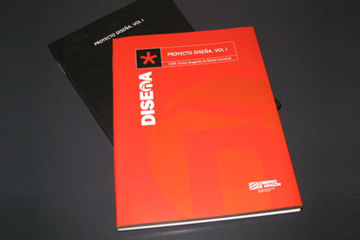
Brigitte Sauvage, an ADN DESIGN partner, has worked on PROYECTO DISEÑA. VOLUMEN 1, the book published by CADI (Aragon Industrial Design Centre). She wrote an article entitled Use Value, Evolution Motor for the book.
The capacity for innovation, or for evolution, and the ability to identify potential opportunities are key factors for a company in today’s economic situation. The implementation of a successful product strategy implies understanding that the problem raised, at the start of the design process, is the harmonisation/optimisation of the relations between people, items and their context of use. The object is only the end of an analysis process. It consists of the translation of a theoretical profile to a tangible object that can be manufactured and marketed - or a service that can be implemented - in the framework of the objectives and resources of the project put forward by the company.
Labels: Entities, Publications, Training
PLM News
26 October 2007
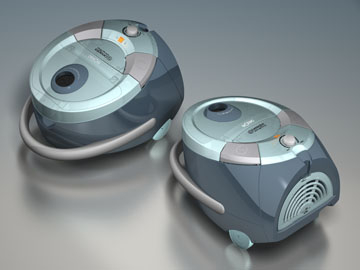
The PLM News magazine, the Siemens PLM Software quarterly news publication, dedicated its UGS NX Success Story to ADN DESIGN in the October 2007 issue.
Labels: Products, Publications


